
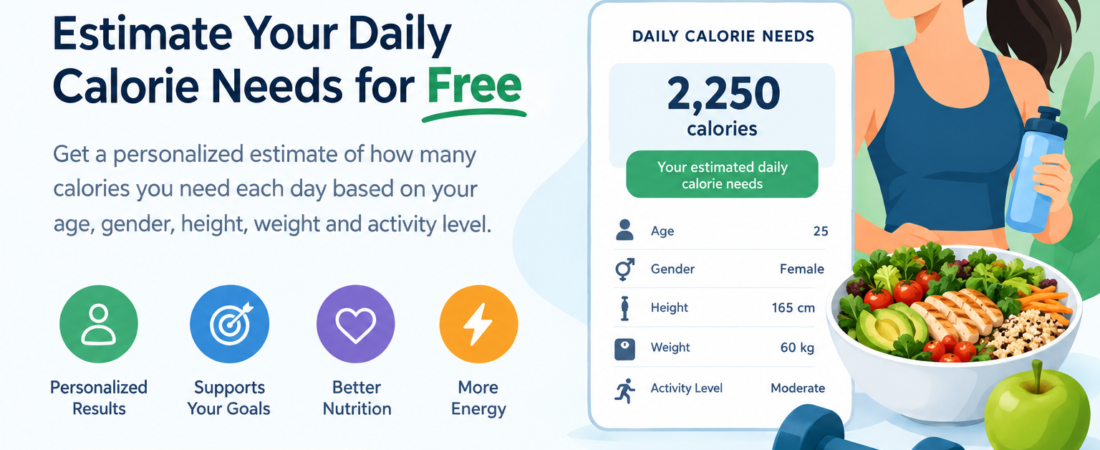
A calorie calculator is a practical online tool that estimates how much energy a person may need each day. Calories are units of energy supplied by food and beverages, while daily requirements reflect the energy the body uses to support essential functions, movement, digestion, and other activities. By entering basic information, such as age, sex, height, weight, and activity level, a person can receive an approximate daily calorie target for maintenance or other goals.
Calorie needs are not the same for everyone. Age can affect metabolism and muscle mass, while height and body weight influence the energy required to support the body. Activity level is also important because someone who exercises regularly or has a physically demanding job generally uses more energy than someone who is mostly sedentary. Body composition, including the proportion of muscle and fat, may further affect energy expenditure. Personal objectives, such as losing weight, maintaining current weight, or gaining weight, also change how an estimate should be interpreted.
The result from a calorie calculator is an informed estimate rather than an exact prescription. Metabolism, appetite, sleep, health conditions, medications, and ordinary differences in daily movement can cause actual energy needs to vary. For this reason, a calculated target is best treated as a starting point and adjusted based on changes in body weight, energy, performance, and overall well-being. This article explains how daily calorie needs are calculated, how to understand the resulting number, and how to apply it safely when planning weight loss, weight maintenance, or weight gain. A gradual, flexible approach is generally more useful than treating any single number as a rigid rule.
Most calorie calculators begin by estimating basal metabolic rate (BMR), the amount of energy the body needs to support essential functions while at rest. These functions include breathing, circulation, temperature regulation, and organ activity. BMR does not represent the total number of calories a person needs in a normal day because it excludes movement, exercise, digestion, and other routine activities. Instead, it provides a starting point for estimating overall energy requirements.
To estimate BMR, a calculator generally uses information such as age, biological sex, height, and current weight. One commonly used method is the Mifflin–St Jeor equation, although some tools rely on other established formulas. Because equations use different assumptions and population data, two reputable calculators may produce slightly different BMR results. These differences do not necessarily indicate that one calculation is incorrect; they reflect the fact that any formula provides an estimate rather than a direct measurement.
After calculating BMR, the tool applies an activity multiplier to estimate total daily energy expenditure (TDEE). This figure is intended to reflect the calories burned through normal living, work, exercise, and digestion. Users are usually asked to select an activity level, such as sedentary, lightly active, moderately active, or very active. The calculator may also request a goal, including maintaining weight, losing weight, or gaining weight. TDEE is a more practical estimate of the calories a person should generally eat in a normal day, whereas BMR is the approximate minimum energy needed at rest. Adjusting intake from the TDEE estimate according to a chosen goal can provide a starting point, but individual results should be monitored and refined over time.
Several terms commonly appear when estimating daily calorie needs: basal metabolic rate (BMR), total daily energy expenditure (TDEE), and maintenance calories. Understanding the difference between them makes a calorie calculator easier to interpret and helps place its results in the proper context.
BMR is the minimum amount of energy the body requires to support essential physiological processes while at rest. These processes include breathing, circulating blood, regulating body temperature, maintaining organ function, and supporting cellular activity. BMR does not represent the calories burned during a typical day, because most people stand, walk, work, exercise, digest food, and perform other activities beyond complete rest.
TDEE is an estimate of the total energy the body uses across an entire day. It includes resting metabolic rate, which is closely related to BMR, as well as the thermic effect of food, or the energy needed to digest and process meals. TDEE also accounts for structured exercise, such as running, strength training, or sports, and non-exercise activity thermogenesis. This latter category includes everyday movement, including walking, standing, climbing stairs, cleaning, shopping, and household tasks. Because these activities differ considerably between individuals, TDEE can vary even among people with similar age, height, weight, and body composition.
Maintenance calories refer to the approximate amount of energy a person needs to consume to keep body weight relatively stable over time. They are not a precise, permanent target. Instead, maintenance calories are best understood as a range that reflects normal fluctuations in appetite, food intake, water retention, and daily movement. The range may shift as body weight, muscle mass, activity level, sleep quality, stress, health status, or routine changes. A calculator provides a useful starting estimate, but observing weight trends and adjusting intake gradually can offer a more individualized understanding of actual energy needs.
A calorie calculator can provide a practical starting point for planning fat loss by estimating how much energy your body may use each day. It commonly considers factors such as age, sex, body size, activity level, and stated goals. Because these inputs are based on averages and self-reported information, the result is best viewed as an initial estimate rather than a precise prescription.
Fat loss generally requires a calorie deficit, meaning average calorie intake is lower than average energy expenditure over time. The deficit does not need to be extreme to be effective. A modest reduction is often easier to maintain, supports regular eating patterns, and may better preserve energy for work, daily activities, and exercise. Gradual changes can also improve adherence, giving you time to develop habits that are realistic beyond a short-term diet.
Use the estimated target alongside a balanced eating pattern rather than focusing only on a daily number. Nutrient-dense foods, including vegetables, fruit, whole grains, legumes, and unsaturated fat sources, can provide essential vitamins and minerals while helping meals remain satisfying. Adequate protein may support muscle maintenance, particularly when combined with resistance training. Fiber and hydration can also contribute to fullness and digestive health, while sufficient sleep supports recovery, appetite regulation, and consistent activity.
Monitor trends over several weeks instead of judging progress from a single weigh-in. Water retention, changes in sodium or carbohydrate intake, hormonal fluctuations, digestion, and individual metabolic differences can all affect scale readings. Consequently, an estimated calorie target cannot guarantee a specific rate of weight loss. If progress stalls, adjust gradually and consider factors such as portion accuracy, activity changes, and recovery. People with medical conditions, a history of disordered eating, or specialized nutritional needs should seek guidance from a qualified health professional before making substantial changes.
A calorie estimate can provide a useful starting point for maintaining your current weight. Begin near the daily amount calculated for your estimated total daily energy expenditure (TDEE), which represents the calories your body may use through basic functions and regular activity. Treat this figure as an initial target rather than a fixed prescription, because individual energy needs can differ from calculator results.
Monitor your body-weight trend over several weeks instead of reacting to daily fluctuations. Weighing under similar conditions and reviewing the average can show whether your intake is broadly matching your expenditure. Also pay attention to hunger, energy, exercise performance, sleep, and general well-being. If weight remains relatively stable and you feel adequately fueled, your maintenance calorie range may be appropriate. If your weight steadily changes in an unintended direction, adjust the target gradually.
For weight gain, add calories progressively rather than increasing intake dramatically. A modest surplus can support gradual progress while limiting unnecessary fat gain. Build balanced meals and snacks around protein-rich foods, such as eggs, dairy products, fish, poultry, beans, lentils, tofu, or lean meats. Include carbohydrate sources for training fuel and daily energy, along with healthy fats from foods such as nuts, seeds, avocado, olive oil, and nut butters. Choosing energy-dense additions can make a surplus easier to achieve without relying exclusively on highly processed foods.
People seeking muscle gain may benefit from combining a controlled calorie surplus with consistent strength training. Resistance exercise provides the stimulus for developing lean mass, while sufficient protein, carbohydrates, recovery, and sleep support adaptation. Eating without limits is not necessary and may produce more fat gain than desired. The appropriate surplus depends on body size, training experience, activity, and personal goals.
Reassess calorie goals periodically as body weight, muscle mass, routine, and activity levels change. A person who gains weight or begins exercising more may require additional calories, while reduced activity may lower daily needs. Small, evidence-based adjustments made over time are generally more practical than relying on a single calculator result.
Activity level is an important factor in estimating daily calorie needs because movement can substantially change total energy expenditure. Calculators typically begin with a baseline metabolic estimate and apply an activity category to account for exercise, work-related movement, commuting, and ordinary daily tasks. Selecting the closest description is more useful than choosing the highest level available.
A sedentary category generally suits people who spend most of the day sitting, perform little structured exercise, and take relatively few steps. This may describe office-based work with a car commute and no regular training. Lightly active usually reflects a mainly seated lifestyle combined with walking, occasional workouts, household tasks, or exercise performed one to three times per week.
Moderately active commonly applies to people who exercise several times weekly, walk regularly, stand for meaningful portions of the day, or have a job involving consistent movement. Examples may include a person combining resistance training or recreational sports with daily walking, or someone working in retail, education, or another role that requires frequent standing and movement.
Very active is better suited to individuals who train intensely on most days, perform substantial endurance or resistance exercise, or work in a physically demanding occupation. Extra active is reserved for exceptional workloads, such as heavy manual labor combined with frequent, vigorous training. It should not be selected simply because one workout felt difficult.
Exercise calories are often overestimated, particularly when devices or routines label every session as intense. A long commute by bicycle, a high daily step count, standing at work, sports practice, and lifting sessions can all contribute to expenditure, but their impact depends on duration, intensity, and frequency. Consider the average week, including rest days, rather than an unusually active day or a single demanding workout.
After selecting a category, combine the calculator estimate with consistent tracking of body weight under similar conditions. Reviewing weight trends over several weeks, alongside food intake and activity, can show whether the chosen level is realistic. If weight changes differ from expectations, adjust the estimate gradually rather than assuming every variation reflects exercise or metabolism alone.
Free calorie calculators are useful for establishing a starting point, but their results should not be treated as precise measurements. Most tools estimate daily energy needs from information such as age, height, weight, sex, and activity level. These inputs support a practical approximation, yet they cannot capture every factor that influences how much energy an individual uses or absorbs.
People with the same height and weight may have different amounts of muscle, body fat, and organ tissue, leading to different resting energy requirements. Hormonal conditions, genetics, medication, sleep, illness, and previous dieting can also affect energy expenditure. Activity estimates introduce further variation because people differ in exercise efficiency and in how much they move outside formal workouts. A demanding training session may be followed by less non-exercise movement, partially offsetting its expected calorie burn.
Food tracking has its own limitations. Nutrition labels commonly allow rounding, and serving sizes may be measured inaccurately. Differences in cooking methods, recipe ingredients, and portion sizes can make actual intake higher or lower than recorded. For these reasons, a calculator’s suggested target is best viewed as an informed estimate rather than a fixed rule.
A practical way to test the estimate is to follow the suggested calorie target consistently for approximately two to four weeks. Track food intake as accurately as practical and monitor body weight under similar conditions. Evaluate the weekly average rather than reacting to isolated daily measurements. If the trend does not support the intended goal, adjust intake gradually instead of making a large immediate change.
Short-term scale fluctuations do not necessarily indicate changes in body fat. Water retention, glycogen storage, sodium intake, digestion, and menstrual-cycle changes can all alter weight from day to day. Allowing enough time to observe the broader trend makes it easier to refine the target sensibly and distinguish normal fluctuations from a genuine need for adjustment.
Calorie estimates are most useful as a guide rather than a strict daily quota. Begin by checking serving sizes on packages, since the amount listed may be smaller than a typical portion. Read nutrition labels carefully and account for foods that are easy to overlook, including cooking oils, sauces, dressings, spreads, sweetened drinks, alcohol, and small snacks. When greater accuracy is useful, try a food scale for a limited period. This can improve awareness of portions without requiring you to weigh every meal indefinitely.
A balanced meal can provide structure without making eating feel restrictive. Build meals around vegetables or fruit, a source of protein, whole grains or another carbohydrate source, and healthy fats. This combination can support fullness, energy, and nutritional variety. It also leaves room for personal preferences: beans, eggs, fish, dairy products, tofu, nuts, seeds, rice, potatoes, and many other foods can fit into a balanced pattern.
Tracking calories is optional, not a requirement for improving health or managing weight. Some people prefer recording meals, while others find portion-based methods more practical. Consistent meal patterns, using a smaller plate, or checking hunger and fullness cues may offer enough structure. If tracking increases anxiety, guilt, or an urge to avoid needed food, consider taking a break and using a less numerical approach.
Focus on patterns across a week rather than judging individual meals. Appetite and calorie needs naturally vary with activity, sleep, stress, social events, and other circumstances. Enjoyable foods can have a regular place in an overall eating pattern, and eating more than planned on one occasion does not require compensatory restriction afterward. Simply return to your usual meals at the next opportunity. A flexible approach is more likely to be sustainable than pursuing perfect numbers every day.
Daily calorie needs vary substantially according to age, sex, body size, muscle mass, genetics, health status, and everyday activity. There is no single calorie target that suits everyone. A calculator provides an estimate rather than a diagnosis or guarantee, so its result should be interpreted as a practical starting point.
Basal metabolic rate (BMR) represents the energy the body uses at rest to support essential functions such as breathing and circulation. It is not usually a safe daily calorie target because it does not account for movement, digestion, or the energy required for normal activities. Very low-calorie diets should not be attempted without qualified medical supervision. Exercise calories also do not always need to be eaten back in full, since activity estimates can be inaccurate and food tracking may contain errors. Consider the calculator’s activity estimate, your goals, hunger, recovery, and changes in body-weight trends.
Calculators may show different results because they use different BMR equations, activity multipliers, data assumptions, and definitions of exercise intensity. Results can also change when measurements are rounded or when a person selects a different activity category. Recalculate when body weight, activity, goals, or circumstances change significantly; otherwise, reviewing the estimate every few weeks or months is generally sufficient. Compare the estimate with real-world trends rather than changing intake after a single day.
Children, teenagers, pregnant or breastfeeding individuals, older adults with medical concerns, and competitive athletes should obtain individualized advice from a doctor or registered dietitian. Professional guidance is especially important for people with diabetes, eating disorders, metabolic conditions, or medication-related concerns. To use a free calorie calculator safely, enter accurate information, select the closest activity level, treat the result as a starting range, monitor energy, hunger, performance, and weight trends over time, and make small, evidence-based adjustments when necessary.